
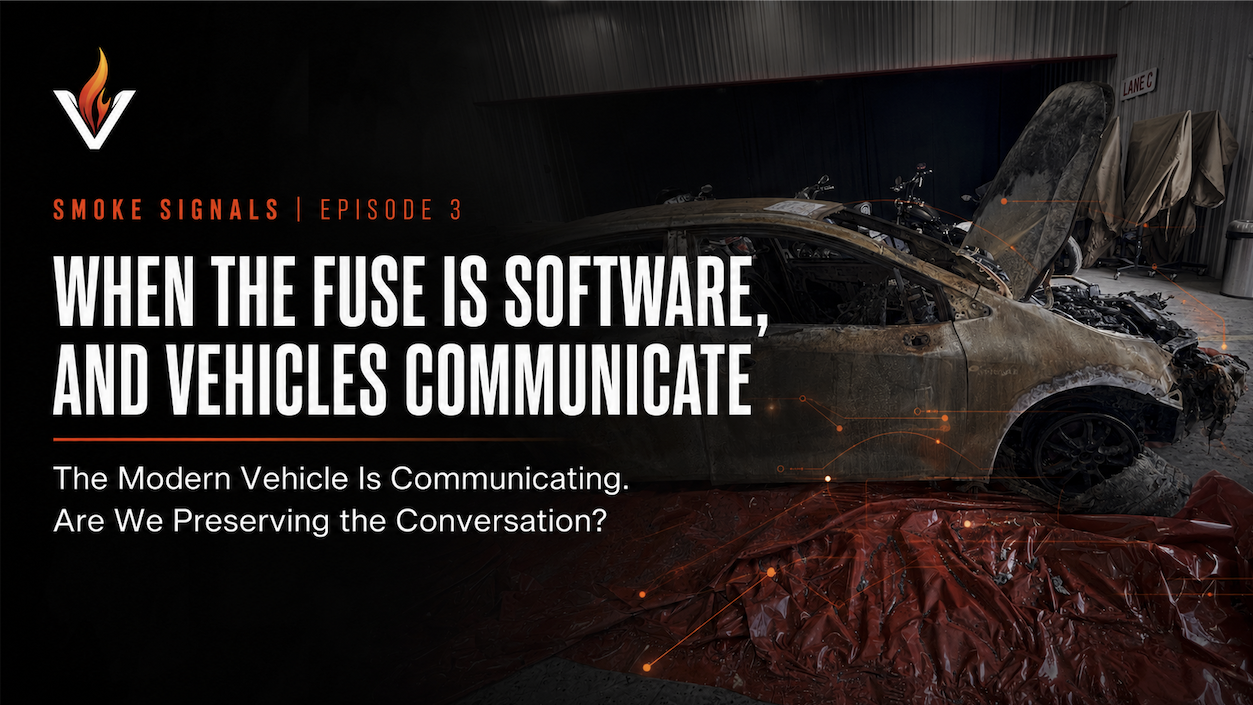
SMOKE SIGNALS - EPISODE 3 WHEN THE FUSE IS SOFTWARE, AND VEHICLES COMMUNICATE
The Modern Vehicle Is Communicating. Are We Preserving the Conversation?
What if one of the most important pieces of evidence in a vehicle fire could be changed after the fire?
A Case for Evidence: Scene Preservation
🔥 You get one chance to preserve the scene. What are you keeping?
How many potential ignition sources do you see?
More importantly, what would you preserve, and why?
🔥 Read the article, study the scene, and drop your answer in the comments.
SMOKE SIGNALS - EP 2: Competent Ignition Sources - Looking Beyond the Burn Patterns
Not everything that gets hot started the fire.
A competent ignition source must be supported by the evidence, not simply capable of producing heat. In this article, we discuss how burn patterns, premature conclusions, and bias can cause investigators to miss the actual source.
Confidence does not create certainty. Evidence does.
#FireInvestigation #OriginAndCause #NFPA921 #ForensicScience #VectorForensicFireAnalysis
🔥SMOKE SIGNALS: Communicating with Your Expert🔥
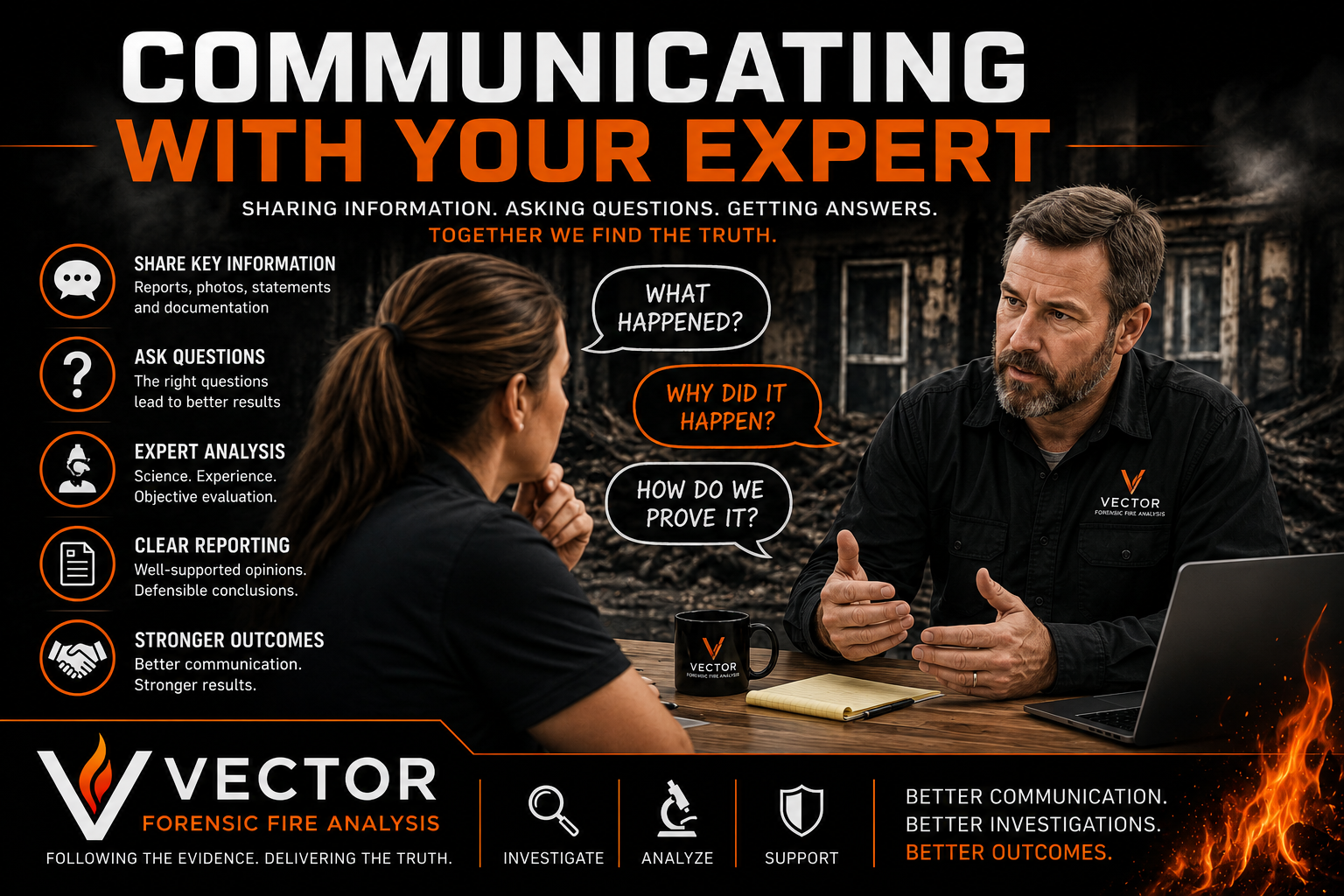
Communicating with Your Expert: Understanding the Expert Report
Because the best investigations begin with the right conversation.
Picture this...
You've just assigned a fire loss. The scene is still smoking, the insured has three different versions of what happened, the contractor is already talking about demolition, and someone inevitably asks:
"So... what caused it?"
As tempting as it is to expect an immediate answer, a quality fire investigation doesn't work like a microwave, it works like a slow cooker. The best conclusions come from collecting facts, testing hypotheses, and letting the evidence tell the story.
The good news? You don't have to be a fire investigator to get the most value from your expert. You simply need to know what information they need, how the investigation progresses, and how to read the report they're preparing for you.