
A Case for Evidence: Scene Preservation
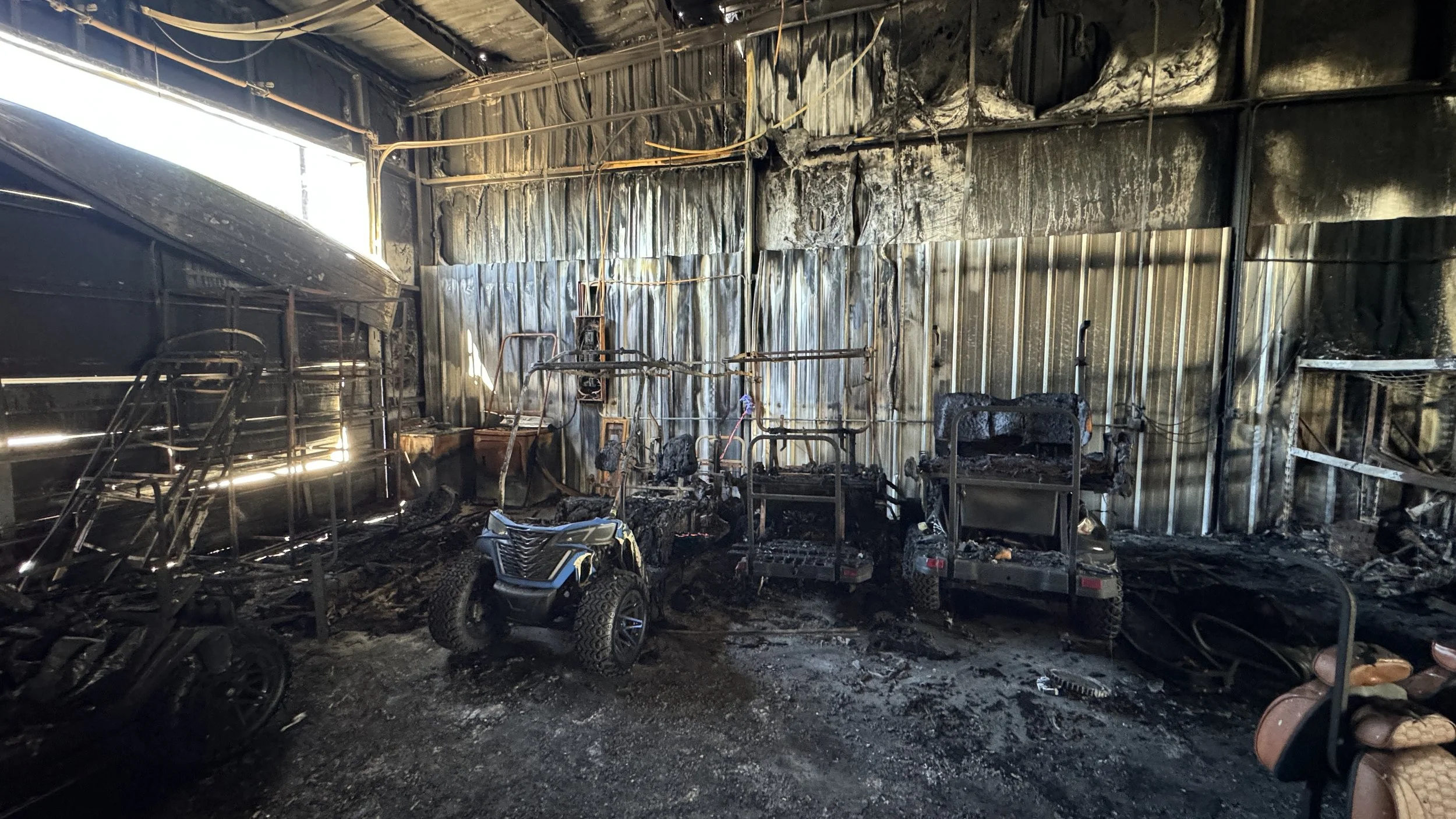
Take a good look at these photographs before reading any further.
Seriously.
Zoom in.
Look past the heaviest damage.
Look at the equipment.
Look at the wiring.
Look at what is damaged.
And just as importantly, look at what isn't.
Now imagine this is your scene.
Cleanup starts tomorrow.
Equipment may be moved.
Debris may be discarded.
And six months from now, someone may ask you to defend your cause determination.
What are you preserving TODAY?
That is the exercise.
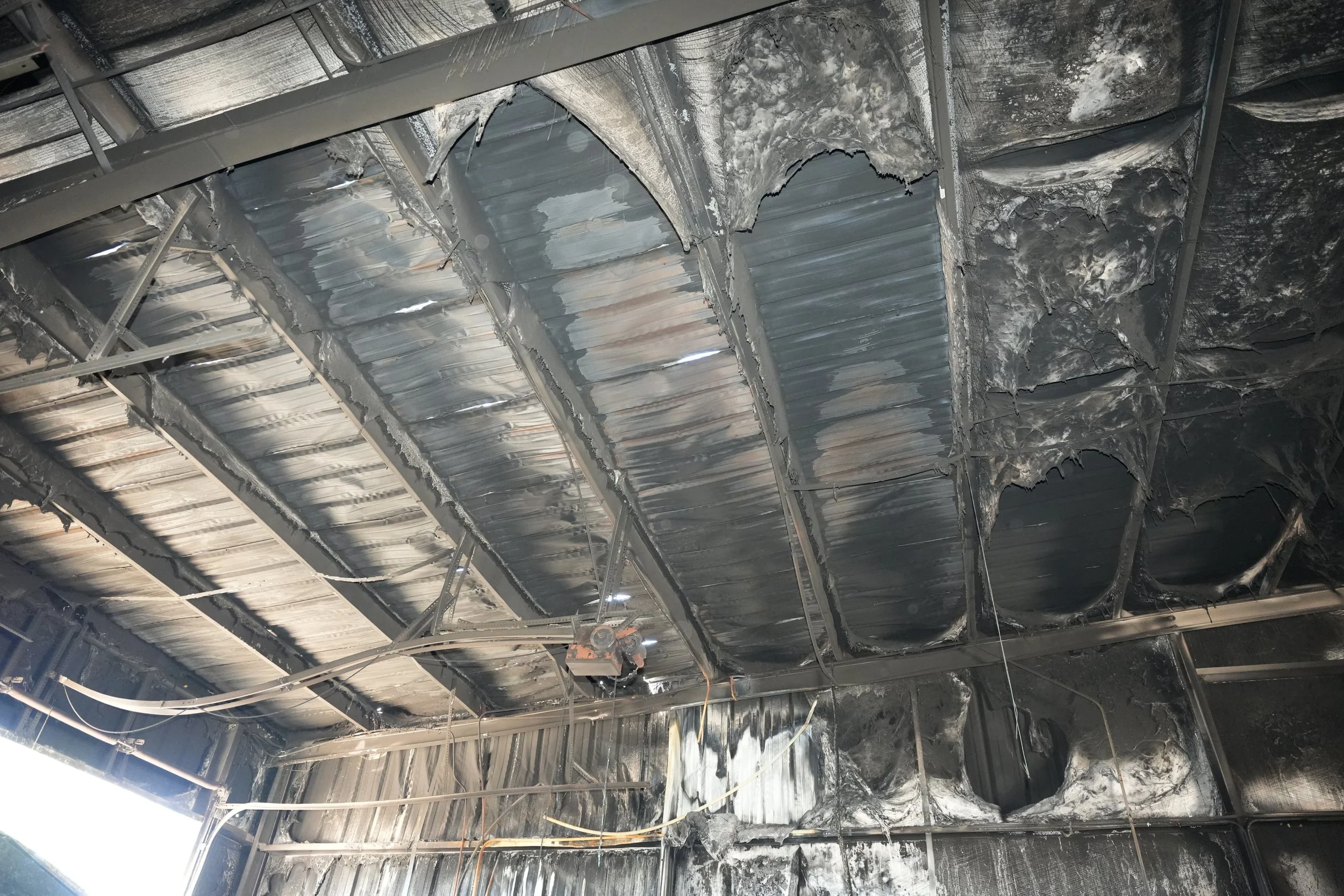
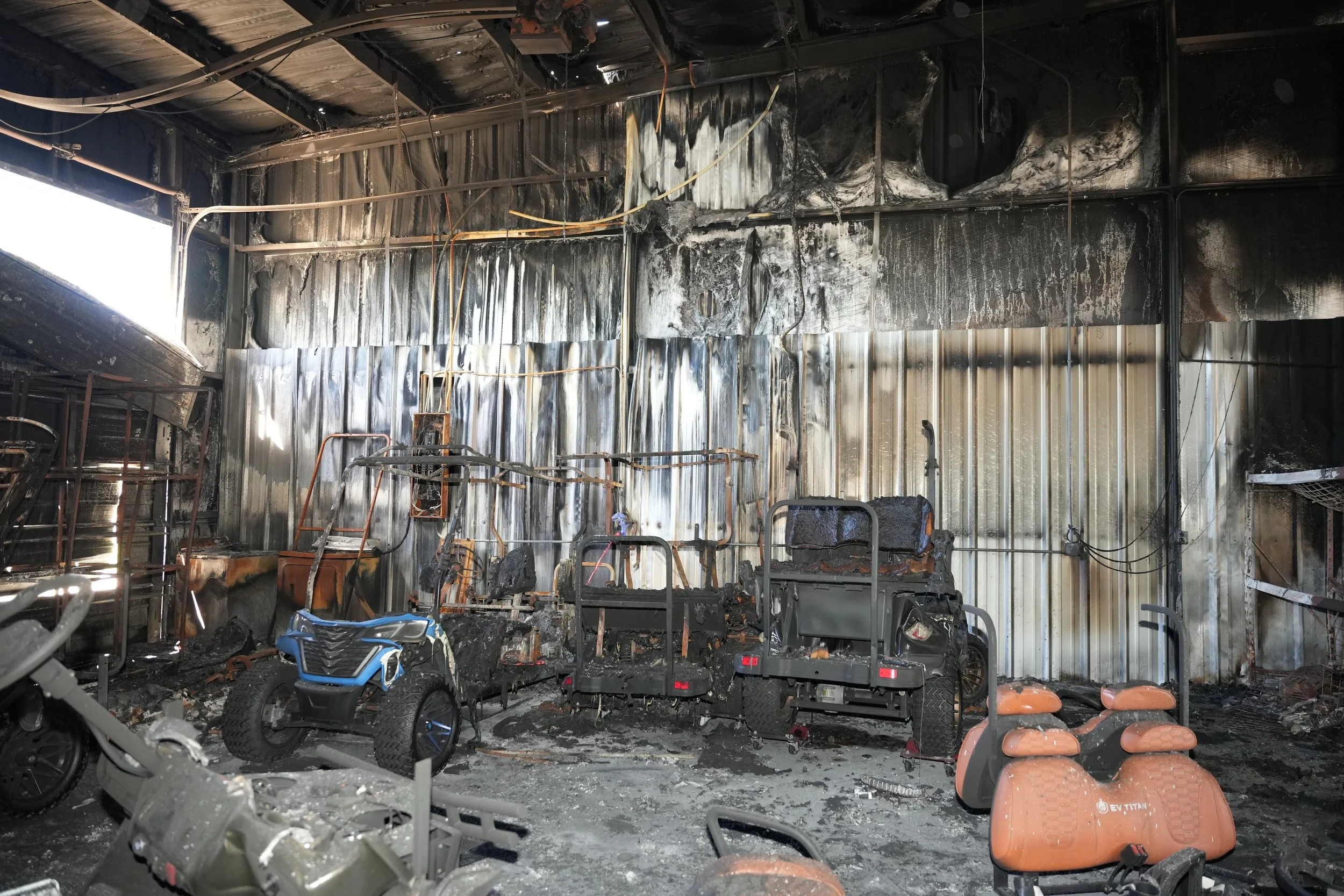
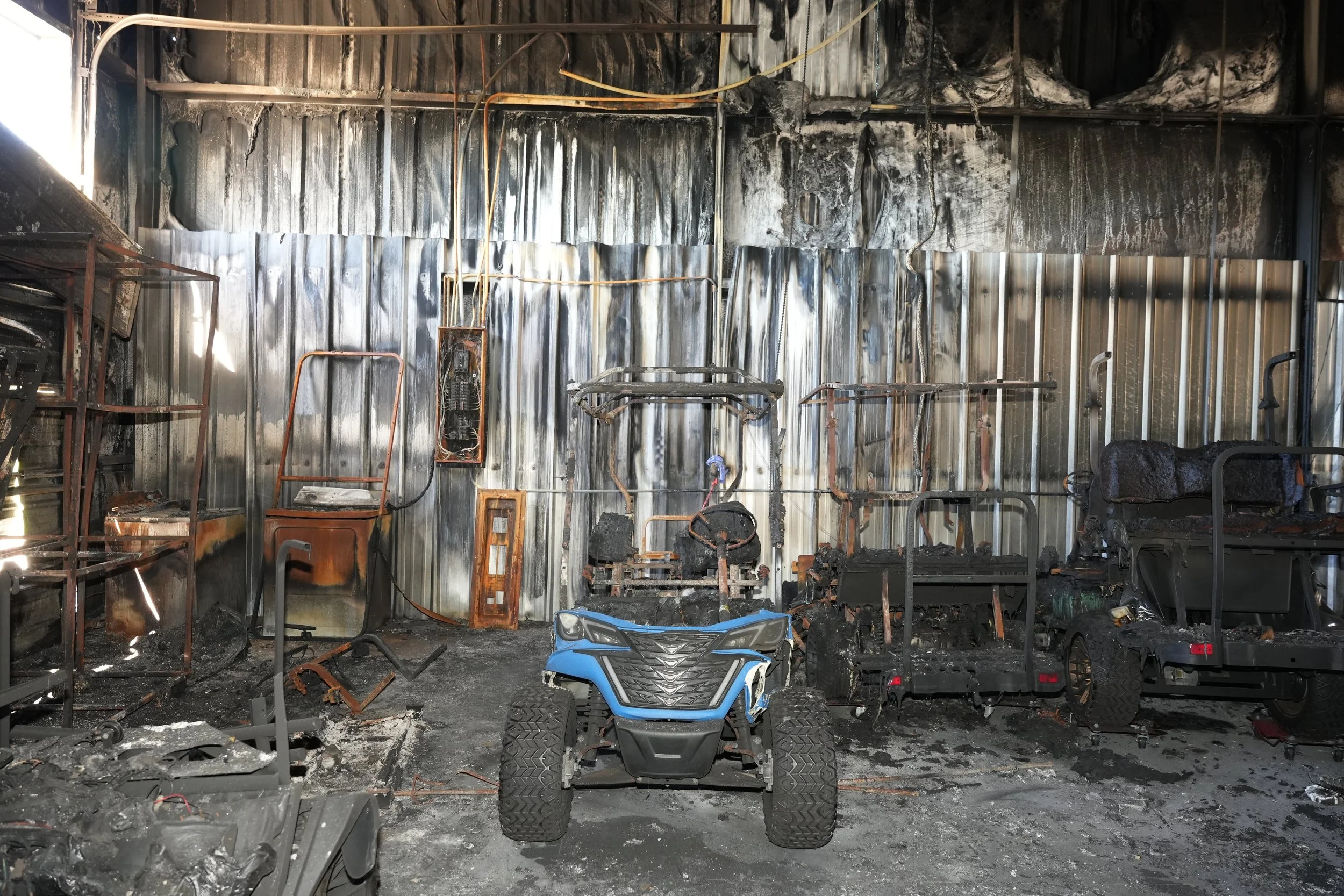
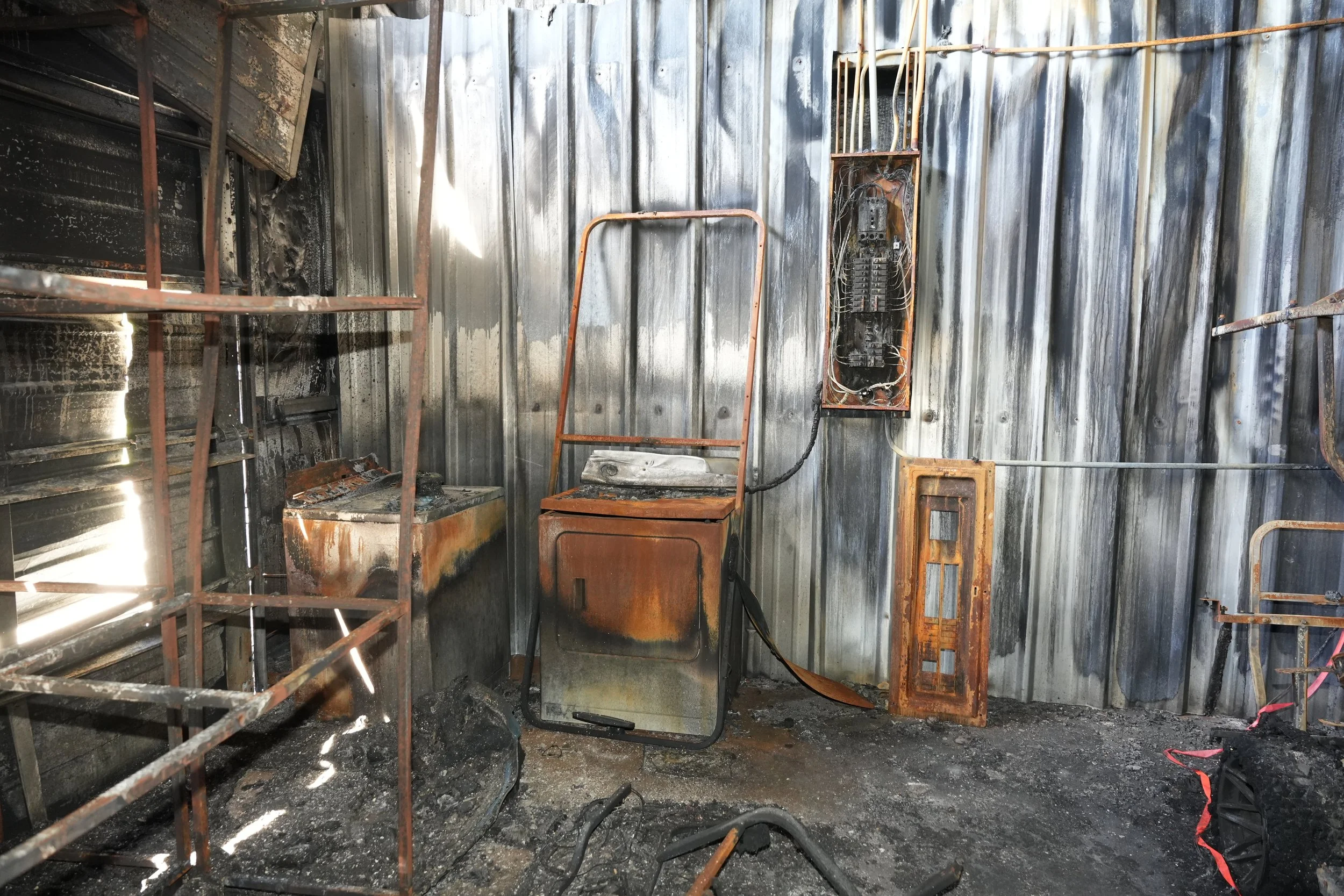
Do not automatically choose the area with the greatest damage.
Fire damage can be heavily influenced by fuel loading, ventilation, geometry, and fire development.
The most damaged object in the room does not automatically become the ignition source.
And do not choose the easiest explanation simply because something capable of producing heat or electrical energy happens to be sitting in the fire area.
Based solely on these photographs, I see multiple potential ignition-source categories that deserve consideration:
Electrical service and distribution equipment
Building wiring and branch circuits
Laundry appliances and their electrical connections
Golf carts or utility vehicles
Batteries and battery connections
Charging equipment and conductors
Controllers, motors, and powered components
Fuel-system components, where applicable
Additional energized equipment within the area
But here is where the terminology matters:
PRESENT does not mean CAUSAL.
CAPABLE does not automatically mean COMPETENT.
COMPETENT does not automatically mean THE CAUSE.
A component may be capable of producing heat, an arc, a spark, or another form of ignition energy.
That does not establish that it:
Had energy available at the relevant time
Was energized or operating
Was located where ignition occurred
Could ignite the available first fuel
Produced the required heat or energy transfer
Fits the observed fire development
Fits the physical evidence
Fits the timeline
Those questions have to be answered through the investigation.
That is why, at this stage, I am not asking:
“What caused this fire?”
I am asking:
“Before anything is moved, altered, or discarded, what evidence do we need to preserve so every reasonable ignition hypothesis can still be tested, included, and/or excluded?”
That changes the way you collect evidence.
INCLUSIVE EXAMINATION
What would you preserve because it could potentially support an ignition hypothesis?
Possibly:
Electrical panels and breakers
Feeders and branch-circuit conductors
Receptacles and switches
Appliance cords and connections
The dryer and associated electrical components
Cart or vehicle batteries
Battery cables and terminals
Chargers and charging conductors
Controllers and motors
Fuel-system components
Extension cords and power strips
Other powered equipment within the area
But now comes the part I think gets overlooked.
EXCLUSIVE EXAMINATION
What would you preserve specifically because it might help you prove that one of those theories did NOT happen?
That might include:
Uninvolved portions of the same branch circuit
Comparison conductors
Corresponding breakers
Undamaged receptacles
Uninvolved batteries
Other chargers
Similar vehicles or carts
Appliance controls and internal components
Representative components from unaffected areas
An exemplar located only a few feet away
Fire exposed articles, contents, or equipment
Because sometimes the evidence that makes your opinion defensible is not just the evidence that proves your hypothesis.
It is the evidence that allowed you to eliminate the alternatives.
NFPA 921's scientific-method framework requires investigators to collect and analyze data, develop hypotheses, and test those hypotheses against the available evidence.¹
ASTM E1188 likewise addresses the collection and preservation of information and physical evidence for subsequent examination and analysis.²
And when later examination or testing may alter the evidence, ASTM E860 becomes important because another party may eventually need the opportunity to evaluate that same item.³
Once something is discarded, altered, dismantled, or destructively tested:
You may never get another chance to ask a different question of it.
So here is my challenge to the investigators, engineers, attorneys, claims professionals, and subrogation professionals in my network:
🔥 How many POTENTIAL ignition sources do you see?
🔍 Which ones could actually become competent ignition sources after further examination?
📦 What are you retaining to support your hypotheses?
❌ What are you retaining specifically to exclude them?
And this is the one I am most interested in:
👀 What would YOU preserve that another investigator might walk right past?
Do not just give me a number.
Tell me why.
That is where this discussion gets interesting.
Vector Forensic Fire Analysis
Excellence... Every Assignment. Every Client. Every Time!
References
¹ NFPA 921: Guide for Fire and Explosion Investigations, 2024 ed., including its scientific-method framework for the collection and analysis of data and the development and testing of hypotheses.
² ASTM International, E1188-23, Standard Practice for Collection and Preservation of Information and Physical Items by a Technical Investigator.
³ ASTM International, E860-22, Standard Practice for Examining and Preparing Items That Are or May Become Involved in Criminal or Civil Litigation.