

Beyond Origin and Cause: Fire Protection System Performance, Enhanced Damages, and Overlooked Subrogation Opportunities
Identifying the origin and cause of a fire is fundamental to a successful investigation. However, in major commercial and industrial losses, determining what started the fire may not fully explain why the resulting damage became catastrophic.
The ignition source explains how the fire began. But what allowed it to grow, spread, or cause damage far beyond the area of origin?
The answers may involve fire development, building conditions, protection system performance, and additional factors that deserve careful examination.
BEYOND IGNITION: WHEN FIRE PROTECTION SYSTEMS MATTER
Commercial buildings rely on various active and passive fire protection measures intended to detect, control, contain, or limit developing fires.
A comprehensive investigation may examine:
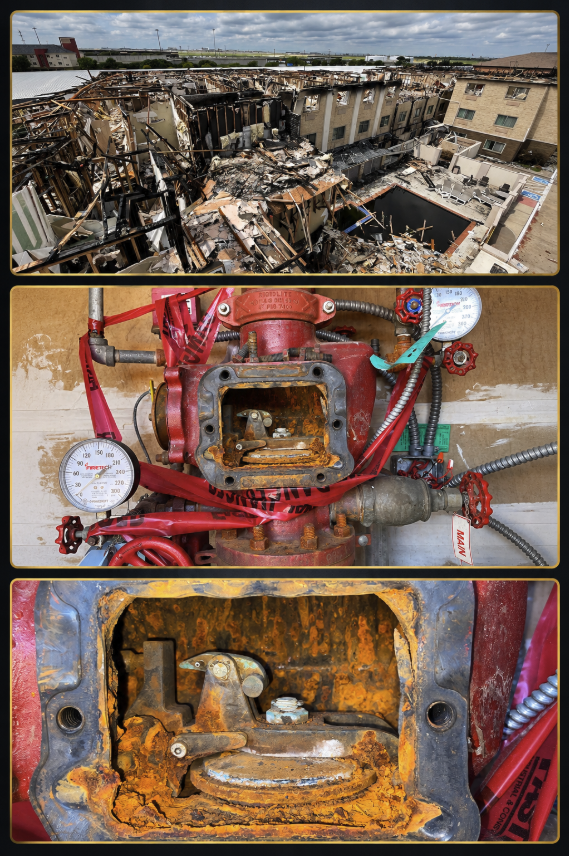
Automatic Sprinkler Systems: Did the system operate as designed? Were sprinkler coverage, water supply, control valves, obstructions, or system impairments relevant to its performance?
Detection, Alarm & Notification: Did the systems detect and communicate the developing fire as intended? What do event histories, monitoring records, and other evidence establish?
Fire & Smoke Compartmentation: Did fire-rated assemblies, fire doors, penetrations, or other building features influence the movement of fire and smoke?
Inspection, Testing & Maintenance: Were systems properly maintained, tested, and operational? Do service records or documented impairments identify conditions requiring further evaluation?
Significant fire damage does not automatically establish a protection system failure. Any conclusion about system performance must account for its design, operating conditions, applicable requirements, and the evidence.
NON-CAUSATIVE SUBROGATION THOUGHTS: LOOKING BEYOND THE “WHO/WHAT” THAT STARTED THE FIRE
One consideration sometimes overlooked in major-loss investigations is the possibility of enhanced damages involving a party or system that did not cause the initial ignition.
Consider a hypothetical building fire where an electrical malfunction initiates combustion. The building is equipped with an automatic sprinkler system, but the system does not operate as designed because of a condition identified during the subsequent investigation.
Although the sprinkler system did not cause the fire, its performance may have materially influenced the extent of the damage.
This raises additional investigative questions:
What prevented the system from performing as intended?
Did installation, inspection, maintenance, equipment condition, or an impairment contribute?
Could appropriate system performance have reduced fire growth, spread, or the resulting damage?
Is there sufficient evidence to support an evaluation of additional damages attributable to the condition?
A party does not necessarily have to cause the ignition to be potentially relevant to a subrogation evaluation.
In appropriate circumstances, supported findings involving fire protection system performance may identify potential third-party recovery opportunities associated with enhanced damages.
Establishing such an opportunity requires evidence of the relevant deficiency, its causal relationship to additional damage, and an appropriate legal evaluation of responsibility.
WHY THIS MATTERS TO THE CLAIM
A properly scoped investigation can provide answers extending beyond ignition by evaluating the systems and conditions that influenced the fire's development.
That may include specialized fire protection engineering, examination of building systems, maintenance documentation, alarm records, and technically supported evaluation of potential enhanced damages.
For claims professionals and subrogation counsel, these findings may reveal meaningful recovery opportunities that would otherwise go unexplored.
FROM THE INVESTIGATOR'S DESK
The cause of the fire and the factors contributing to the magnitude of the loss are related, but distinct investigative questions.
NFPA 921's systematic scientific methodology provides a foundation for evaluating the available evidence, developing and testing hypotheses, and reaching defensible conclusions.
At Vector Forensic Fire Analysis, our objective is to deliver meaningful, scientifically supported findings that help clients understand not only how a fire began, but also the circumstances that contributed to the resulting loss.
Finding the ignition source answers one important question. Understanding the performance of the systems intended to limit the fire may reveal additional answers—and additional recovery considerations.
LET'S TALK FIRE INVESTIGATION
When evaluating major commercial fire losses, are fire protection system performance and potential non-causative subrogation opportunities receiving the attention they deserve?
SMOKE SIGNALS | Fire Science • Investigative Insights • Claims Education
W.D. “Wes” Bradley, IAAI-CFI, MSci, BSci (Hons.)
+1 (936) 323-2152 | client.services@vectorffa.com | www.VectorFFA.com
EXCELLENCE… Every Assignment. Every Client. Every Time!
Vector Forensic Fire Analysis, 10160 Hwy 242 Ste 800-4131 , Conroe, TX 77385, United States